
he final horn in a women's basketball championship rarely settles the argument. Women's Basketball Final Results tell you who scored more, who survived foul trouble, who made the last clean look. They do not tell you why a 12-point lead felt fragile for six straight minutes, or why the best shooter on the floor suddenly passed up an open three. I keep coming back to one title game where the winning team shot 38 percent and still controlled every meaningful stretch. The final score looked ugly. The performance did not. A team can win the rebounding battle by 15 and lose by eight;a team can shoot 45 percent from deep and never lead after the first quarter. Numbers explain production。not pressure.Watch enough finals and the box score starts to look like a passport photo: accurate, flat, barely human. Women's Basketball Final Results usually highlight the leading scorer, but the decisive player is often the guard who absorbs pressure for 38 minutes and finishes with nine points and seven assists. In one recent final。
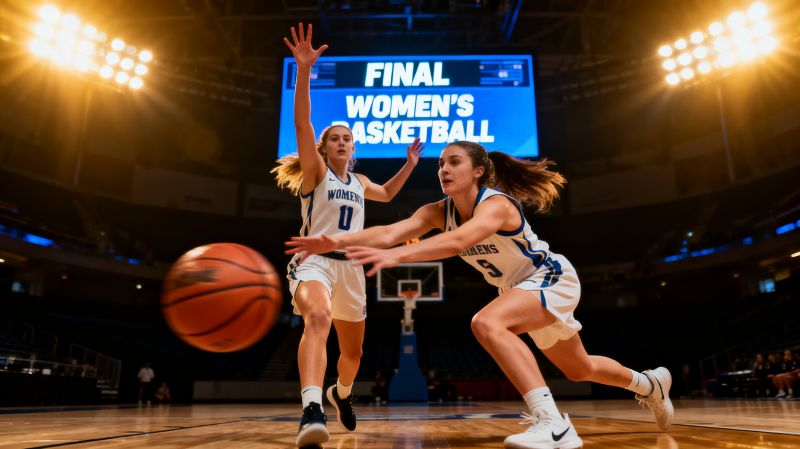
that guard went 2-for-11 from the field. Her team outscored the opponent by 17 while she was on the floor. She kept calling the same high screen, dragging the defense two feet to the left, opening a baseline cut that produced easy layups. Nobody remembers that possession. Everybody remembers the final score. The same pattern shows up in regional finals: one player's quiet decisions tilt the game before the broadcast graphics catch up.Coaches talk about 'winning habits' so often the phrase loses meaning. Then a final arrives and the habits become visible. A team trailing by five with 1:40 left does not need a miracle;it needs one stop, one smart foul, one patient possession. Women's Basketball Final Results from the last decade show a steady rise in fourth-quarter comebacks, partly because three-point shooting has stretched the floor and partly because officials call tighter hand-checking fouls. The numbers are useful. The context is better. A 10-0 run in a semifinal means less than a single defensive rebound in the final minute of a championship. I have seen a team erase a nine-point deficit in 70 seconds and still lose because it burned its last timeout before the final possession.What gets lost in the postgame scroll is the physical cost. I watched a center in a final take an elbow above the eye。get taped up, and return for the last six minutes. She scored two points after that. She also altered four shots. Women's Basketball Final Results list her as a role player with modest stats;the film shows a player who changed the geometry of the paint. That is the gap between data and basketball. Anyone can read a final score. Fewer people notice the possession where a guard denies an inbound pass, forces a timeout, and shifts the entire momentum of a title game. Those small collisions decide more championships than last-second heaves ever will.So when the bracket collapses into one last game, treat Women's Basketball Final Results as a starting point, not a verdict. Check the quarter-by-quarter splits, the offensive rebounds。the fouls drawn by the secondary ball handler. Look for the player who played 34 minutes and took only six shots but set every screen that freed the shooter. The scoreboard records the ending. The final result, the one that actually explains the game, lives in the margins. That is where championships are usually decided, and where the most honest basketball stories begin.