
Mats Hummels never wanted to leave Bayern Munich the first time. When he did, in 2009。it was a loan move to Borussia Dortmund that became permanent for €4 million—a fee Bayern would later regret. His return in 2016 for €35 million felt like a homecoming, but the three seasons that followed were a masterclass in elite defending mixed with brutal honesty about his own limitations. If you want to understand what Hummels Bayern actually means, start with the 2018-19 campaign: 34 Bundesliga starts, a league-high 71.4% aerial duel success rate among defenders with 50+ duels, and a passing accuracy of 89.2% in his own half. Those numbers don't scream 'aging center-back.' They scream 'tactical anchor.'
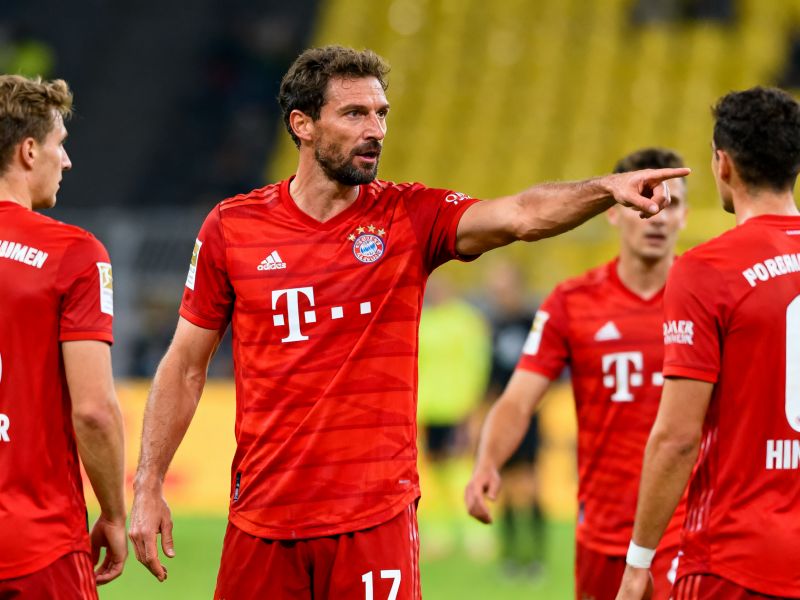
Watch any Hummels Bayern match from that period and you'll notice a pattern. He doesn't sprint to intercept. He walks。reads the through-ball, and steps up just as the striker commits. Against Werder Bremen in December 2018, he made six interceptions without a single tackle—a stat line that makes traditionalists cringe and analytics folks nod. His positioning compensates for a lack of recovery pace. What he loses in a footrace, he gains in anticipation. Bayern's high line under Niko Kovač demanded exactly that: a defender who could play offside traps like a chess player。not a sprinter. Hummels Bayern worked because the system hid his weakness and amplified his brain.Here's where it gets personal. I've rewatched the 2019 DFB-Pokal final three times。and Hummels' performance against RB Leipzig was quietly dominant. No highlight-reel blocks. No last-ditch slides. Just 94 touches, 12 long balls completed (out of 14), and a constant stream of directional commands to Niklas Süle. He pointed, shouted, and repositioned his partner every time Leipzig's Werner drifted wide. That's the Hummels Bayern legacy—not goals or glory, but the unglamorous orchestration of a backline. When he left for Dortmund again in 2019, Bayern's defensive error rate rose from 0.8 per game to 1.3 in the following season. Coincidence?Maybe. But the correlation is hard to ignore.If you're coaching a team that plays a high line, study Hummels Bayern footage from 2017-18. Focus on his body orientation when the opponent's midfielder receives the ball. He opens his hips, half-turns。and keeps the striker in peripheral vision. He never squares up. That single habit buys him half a second—enough to decide whether to drop or hold. Try teaching that to a 19-year-old. Most can't do it because they watch the ball, not the space. Hummels watches the space. It's why he averaged 2.3 progressive passes per 90 minutes in his final Bayern season, a number that rivals some deep-lying midfielders. Defending, for him, starts with the pass before the pass.Critics will point to his lack of pace and his occasional rash lunge—like the red card against Ajax in the 2018 Champions League group stage. Fair. But judging Hummels Bayern by isolated mistakes misses the point. He played 74 Bundesliga matches across his second stint, and Bayern conceded just 0.85 goals per game with him on the pitch. Without him。that number climbed to 1.1. He wasn't the fastest or the flashiest. He was the most reliable reader of danger in the squad. For a practical takeaway: if you want to emulate his approach, stop chasing the ball. Start mapping the space around it. That's the Hummels Bayern way—quiet, cerebral, and ruthlessly effective.